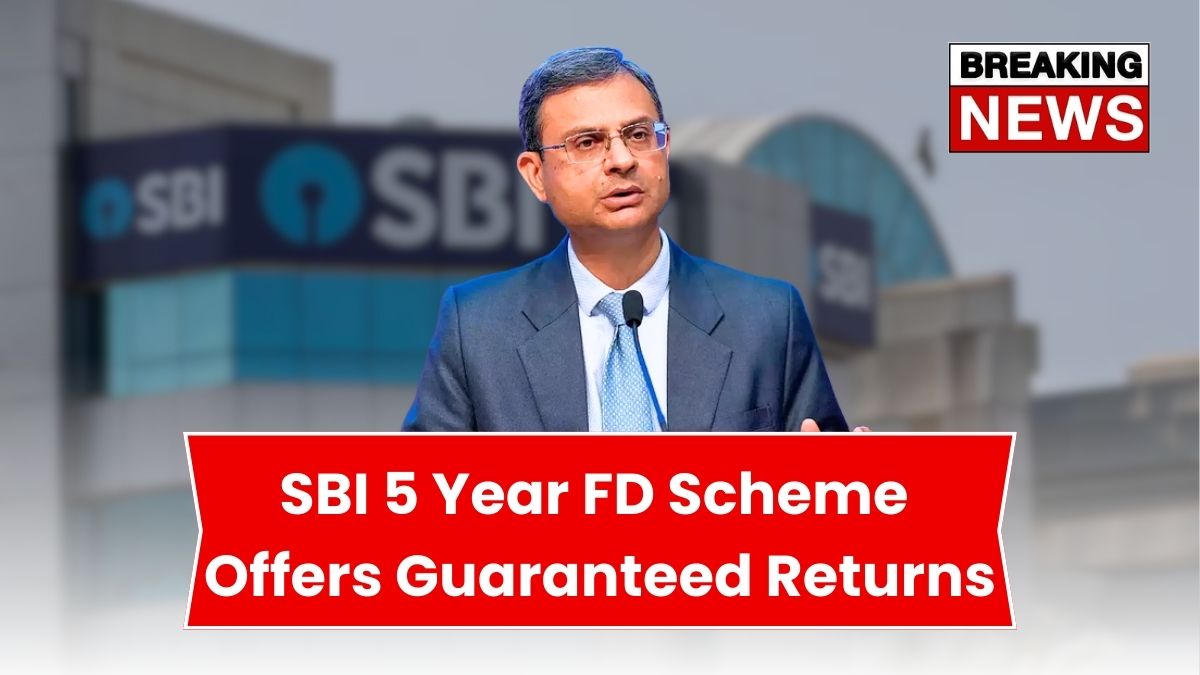
SBI 5 Year Investment Plan 2026 – In a world where markets go up and down without warning, many people still prefer investments that let them sleep peacefully at night. That’s exactly why SBI’s 5-year fixed deposit scheme continues to attract lakhs of investors. It’s simple — you deposit your money, the bank locks in an interest rate, and you get guaranteed returns at the end of five years. No market drama, no risky swings, just steady and predictable growth.
Why People Still Love This Traditional Investment
Fixed deposits may sound old-fashioned, but they remain popular for a reason. Your money stays safe, and the return is clearly known from day one. Since SBI is India’s largest public sector bank, people trust it with their long-term savings. On top of that, deposits up to ₹5 lakh are insured under government-backed deposit insurance. That extra layer of safety gives investors confidence, especially those who don’t want to take risks with their hard-earned savings.
Current Interest Rates and What You Can Expect
As of now, SBI offers around 6.50% annual interest on a 5-year fixed deposit for regular customers. Senior citizens usually get about 0.50% extra, taking their rate close to 7.00% per year. Interest is compounded quarterly, which means your interest keeps earning more interest. Over five years, this compounding effect makes a noticeable difference. While it won’t make you rich overnight, it steadily builds your savings without any surprises.

Tax Benefits That Make It Even More Attractive
One special version of the SBI 5-year FD is the tax-saving FD. This option allows you to claim deductions of up to ₹1.5 lakh under Section 80C of the Income Tax Act. That means you save tax while also earning interest. However, the interest you earn is still taxable based on your income slab. Senior citizens get some extra relief under Section 80TTB, which allows exemption on interest income up to a certain limit. It’s a mix of safety and tax planning in one place.
Opening an SBI FD Is Easier Than Ever
You no longer need to spend hours at a bank branch to open a fixed deposit. If you already have an SBI account, you can open an FD online through internet banking or the YONO mobile app in just a few minutes. You simply choose the amount, tenure, and type of FD. If you prefer offline service, visiting a branch with basic KYC documents like Aadhaar and PAN card will do the job. The process is smooth and beginner-friendly.
Who Should Consider This 5-Year Scheme
This plan is perfect for people who want stable and guaranteed returns. Retirees often use it to generate regular income. Parents saving for future expenses like education or weddings also find it useful. Even young earners who want to build disciplined savings without market risk can benefit. Investors who already invest in stocks sometimes park a portion of their money in FDs to balance risk. It works well as the “safe” part of your investment portfolio.

Understanding the Lock-In and Early Withdrawal Rules
A 5-year FD is meant to stay invested for the full term. If you withdraw early, the bank will reduce your interest rate and may also charge a small penalty. This means you’ll earn less than expected. That’s why it’s important not to invest emergency funds in a long-term FD. Keep separate savings for unexpected expenses, and let your FD grow undisturbed for the full five years to get the maximum benefit.
How It Compares with Other Investment Options
Compared to market-linked investments like mutual funds or shares, SBI’s 5-year FD offers much lower risk but also lower returns. Public Provident Fund (PPF) may offer better tax benefits but locks your money for 15 years. Debt mutual funds can sometimes give higher returns but come with market risk. Corporate FDs may offer higher interest but don’t have the same level of safety as SBI. So, this scheme stands out mainly for safety, trust, and simplicity.
The Role of This FD in Your Financial Planning
Think of this FD as the stable foundation of your financial plan. It’s not designed to create massive wealth quickly, but it protects your capital and gives steady growth. Inflation may reduce the real value of returns slightly, but the peace of mind and predictability make up for it. Financial experts often suggest mixing safe options like FDs with growth investments like equities to create a balanced portfolio.

Digital Convenience Makes It Even Better
SBI has made managing fixed deposits very easy through digital banking. You can track your FD, download receipts, renew deposits, or close them online without visiting a branch. Auto-renewal options also ensure your money keeps earning interest even after maturity if you don’t need it immediately. This blend of traditional safety and modern convenience makes the scheme suitable for both older and younger investors.
Things to Keep in Mind Before Investing
Before locking your money for five years, make sure you won’t need it urgently. Check the latest interest rates because banks revise them from time to time. Decide whether you want cumulative FD (interest paid at maturity) or non-cumulative FD (regular interest payouts). Also, remember to consider tax on interest earnings while calculating your final returns. Planning ahead helps you get the most out of this scheme.
Final Thoughts
SBI’s 5-year fixed deposit scheme remains one of the most dependable investment options in India. It offers guaranteed returns, high safety, and easy access through digital banking. While it may not offer exciting, high-risk rewards, it does exactly what it promises — steady and secure growth of your money. For investors who value stability and trust over market thrills, this scheme continues to be a smart and reliable choice.

Disclaimer
This article is for general informational purposes only and should not be considered financial or investment advice. Interest rates, tax rules, and bank policies may change over time. Readers are advised to verify the latest details directly with State Bank of India or a certified financial advisor before making any investment decisions. Individual financial needs and risk profiles differ, so choose investments that suit your personal goals and circumstances.